Harry Kellar
"Dean of American Magicians"
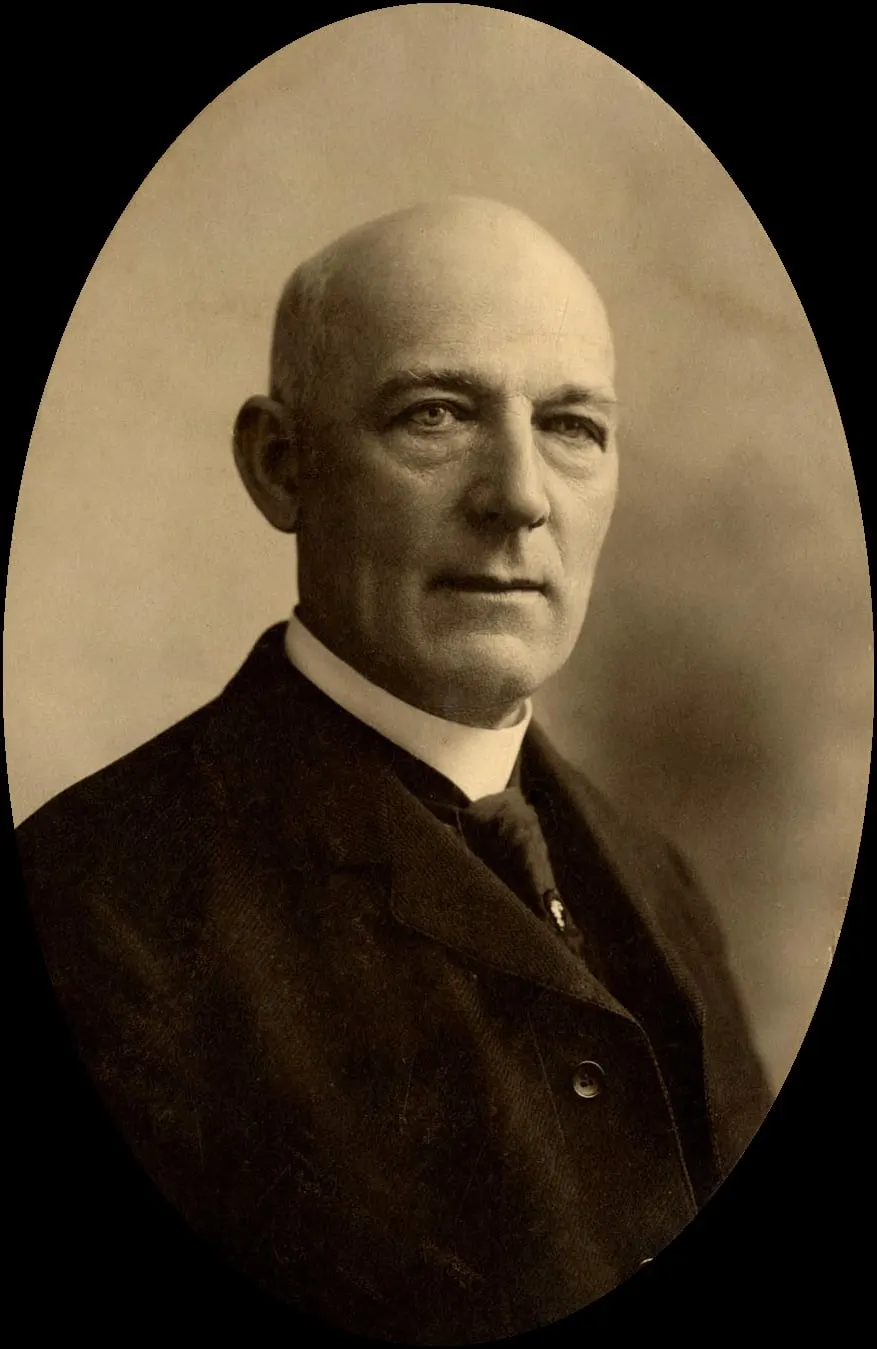

The dean of American magicians, who made the passing-on of an act a tradition.
- Born
- 1849-07-11
- Died
- 1922-03-10
- Country / base
- United States
- Genres
- Stage Magic ・Illusion
Left alone, a performing art dies with the performer. What Kellar gave magic was less a repertoire than a way of handing it on. What happened on the night of his farewell show shaped American magic for decades afterwards.
Key achievements
- Born in Erie, Pennsylvania; toured the world and became America's leading stage magician.
- On retiring, publicly named Howard Thurston as his successor — a ceremonial handover that became a tradition.
- Remains a subject of study, including a biographical feature by the U.S. public broadcaster PBS.
A migrant’s son
Kellar was born in 1849 in Erie, Pennsylvania, as Heinrich Keller, to parents who had emigrated from Germany.
What drew him into conjuring was seeing a touring magician billed as The Fakir of Ava, whose real name was Isaiah Hughes. The boy was captivated on sight and became Hughes’s assistant, and from there his life as a touring magician began.
A boy watches a famous performer, apprentices himself to that person, and becomes the next generation’s carrier. The pattern is, in effect, a rehearsal for what Kellar would later do for Thurston.
An apprenticeship with the Davenports
In 1869 Kellar joined a company billed as The Davenport Brothers and Fay — Ira Erastus Davenport, William Henry Davenport and William Fay, a group presenting spiritualist material.
Here is one of the tangles of nineteenth-century magic history. In 1865 John Nevil Maskelyne had exposed the Davenports’ methods from a stage in England and made his name as their accuser. Four years later, in America, Kellar was working as a member of their company. The same subject was an adversary to one man and a training ground for another.
In 1875 the party was shipwrecked. In the aftermath, Fay left Kellar to rejoin the Davenports, and Kellar went on as an independent performer.
The Philadelphia theatre
Kellar toured internationally and became America’s leading stage magician.
In 1891 he opened his own Egyptian Hall theatre in Philadelphia and ran a successful season of seven months. The name came from the London hall, and the venture put Maskelyne’s permanent-residency model into practice on the other side of the Atlantic.
His signature piece was the Levitation of Princess Karnac, which he is said to have spent many years perfecting. The quality of work that goes into finishing a single piece over years belongs to a different order from the hurry of touring.
16 May 1908
What sets Kellar apart is how he left.
On 16 May 1908 he stepped off the stage after a final performance at Ford’s Theatre in Baltimore. In doing so, he publicly named Howard Thurston as his successor, formally handing over the show, the billing and the standing that went with them.
That ceremonial handover became a tradition in American magic. The idea that an act is not personal property but an inheritance took concrete form here.
Thurston met the expectation, running America’s largest touring show for more than twenty years afterwards.
The Dean of American Magicians
In retirement, Kellar came to be known as the Dean of American Magicians. Herrmann was his contemporary; Houdini and Thurston came after him. Kellar stands at the join between the two generations.
He died in Los Angeles in 1922.
He remains a subject of research and preservation, including a biographical feature by the American public broadcaster PBS. That the record of a performer from a century ago survives at all is itself a measure of his standing.
Notable works
- The Levitation of Princess Karnac — the signature piece he spent years perfecting
- The long season at his Egyptian Hall in Philadelphia (1891)
Chronology
Only years that could be verified are listed.
- 1849 Born Heinrich Keller in Erie, Pennsylvania, to German immigrant parents
- 1869 Joins the spiritualist troupe "The Davenport Brothers and Fay"
- 1891 Opens his own Egyptian Hall theatre in Philadelphia and runs a successful seven-month season
- 1908 Retires on 16 May after a final show at Ford's Theatre, Baltimore, handing his mantle to Howard Thurston
- 1922 Dies in Los Angeles
What to watch for
- Consider that what you are watching tonight may itself have been inherited from someone else.
- When you watch a veteran, notice the composure in their movements. Polished things have a particular texture.
- A question worth asking children — "What is it that makes a very good performer different?"
- Some pieces take years to finish. It is worth imagining how long that work runs.
We never explain the secrets
You will not find any explanation of how a trick works on this site. Being astonished without knowing is the whole value of the art.
Official links
Sources
The dates and achievements on this page were verified against the following references.
- Harry Kellar (1849–1922) | American Experience PBS(米国公共放送)
- Harry Kellar Wikipedia(英語版)
- Harry Kellar | Illusionist, Escapes, Stage Magician Encyclopædia Britannica
- Harry Kellar — "Dean of American Magicians" Hagen History Center(エリー郡歴史協会)